You can’t control the season, but you can keep your feed plan current
Practical pasture decisions for farms that need clear, reliable information.
It’s spring, and last week you were thinking about taking a paddock out for silage. Then a cold snap arrived, growth slowed, and now you’re wondering whether you’ll need that grass in the next round.
Does the plan still stack up? Before changing it, you can test a lower growth rate and see what that would mean for the feed ahead. It gives you something concrete to weigh up alongside what you’re seeing on farm.
When should you check the plan?
Check when growth, cow numbers or available paddocks change, or when the pasture left after grazing differs from what you expected.
Use current farm conditions and readings. Check an unexpected result or missing record before changing the plan.
What if growth slows?
When growth is strong and you’re considering taking a paddock out for silage, test what slower growth could mean for the next four weeks.
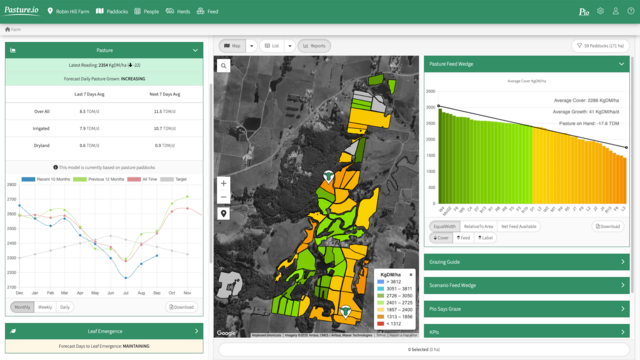
Pasture.io’s Scenario Feed Wedge lets you test growth, pasture per animal and which paddocks are included, looking 7, 14, 21 or 28 days ahead. The Scenario Feed Wedge guide explains how.
Set up the comparison
Start with current covers and records. Check the grazing area, pasture needed per animal and monthly targets. This example looks 28 days ahead.
Run the growth rate you are planning on. Then lower it, keeping everything else the same. Compare the same day in both runs.
Choose a lower rate that makes sense from recent readings and conditions on your farm. The 65 and 45 kg DM/ha/day rates below are examples, not recommended targets for your farm.
Compare the two results
Look at the paddock bars against the target line and any warnings. Check the days leading up to Day 28 as well.
Need the chart basics? See how to read a feed wedge.
Growth: 65 kg DM/ha/day
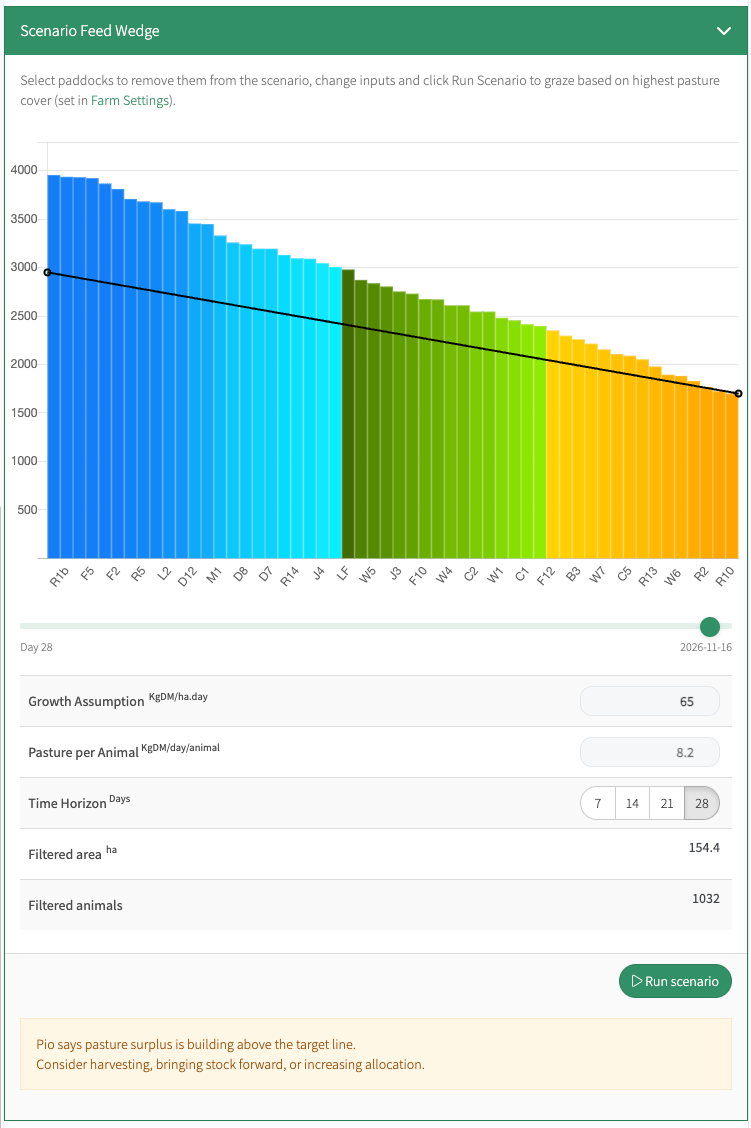
The 65 kg DM/ha/day scenario at Day 28. Pasture per animal: 8.2 kg DM/day; area: 154.4 ha; animals: 1,032.
Growth: 45 kg DM/ha/day
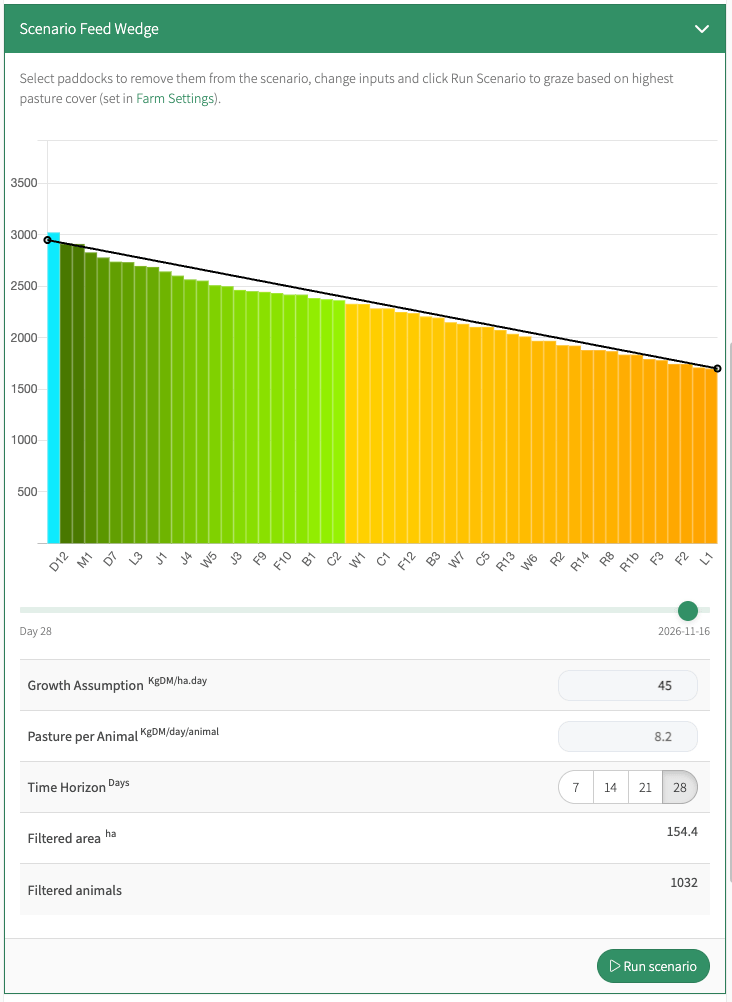
The 45 kg DM/ha/day scenario at the same Day 28. Pasture per animal, area and animal count are unchanged.
At 65 kg DM/ha/day, the blue bars sit well above the target line, showing surplus pasture. Depending on the farm’s needs, pasture quality and conditions, you might take paddocks out for silage or consider topping.
At 45 kg DM/ha/day, the bars sit much closer to the target line, though slightly below it. With less pasture against the target, check whether taking paddocks out still makes sense.
The comparison helps you see what could change before making a decision. Check it against current readings and what you see on farm.
You can also test faster growth, or change pasture per animal to explore feeding more or less pasture alongside other feed. Test demand separately, keeping growth fixed. This shows the effect on pasture needed, rather than choosing the right feed mix.
Tip: Change one input at a time so you can see what caused the difference.
A few things to remember
A scenario shows what could happen with the values you enter. It does not predict which growth rate will occur or decide how to manage the farm.
Settings last only for the session. Leaving paddocks out changes the area tested, and moving into a new month can change the targets. Running a scenario does not create farm records; that takes a separate action. See the Scenario Feed Wedge guide.
Decide what to do next
If slower growth puts feed under pressure, check whether the slowdown looks likely to last. Review silage plans, grazing order, pasture needed per animal and supplements.
You may need to act or check pasture sooner. If the difference is small or the farm evidence is unclear, keep monitoring and decide when you will check again.
Consider access, ground conditions, pasture quality and animal needs. Pio Says Graze can help shortlist paddocks; check its suggestions against the farm.
Once you decide, update your plan and records. The predictive feed wedge uses the selected farm date and recorded activities. Use the temporary scenario to test a change first.
For silage plans, the forward harvest-planning guide explains how to record and adjust a future harvest.
For the wider routine, see how to turn pasture data into grazing decisions.
Why the early check matters
Taranaki dairy farmer Logan Haynes puts it this way:
“Being ten days ahead of yourself means you can see and act before you get yourself under pressure.”
Logan starts planning in April, in New Zealand’s autumn, to check he’ll have enough feed coming out of winter. At other times, when surplus pasture is available, he uses the wedge to help decide when to take paddocks out for silage. These are separate seasonal decisions, both helped by looking ahead.
Four questions to finish
- What has changed?
- What did we test, and what did it show?
- Will we change the plan or keep monitoring?
- When will we check again, and what would bring that forward?
Keep a note of the decision and next check with your plan.
See how Pasture.io brings pasture readings, growth, grazing plans and farm records into one view.
- The Dedicated Team of Pasture.io, 2026-10-21